Showing posts with label Pakej Murah ke Korea. Show all posts

Wednesday, December 2, 2015

Sunday, October 25, 2015

Kingdom of Buyeo, South Korea


Buyeo or Puyŏ (Korean: 부여; Hanja: 夫餘 Korean pronunciation: [pujʌ]) was an ancient kingdom located in parts of southern Manchuria and northern Korea, from around the 2nd century BC to 494. Its remnants were absorbed by the neighboring kingdom of Goguryeo in 494. Both Goguryeo and Baekje, two of the Three Kingdoms of Korea, considered themselves its successor nation.
Although records are sparse and contradictory, it is speculated that in 86 BC, Dongbuyeo (Eastern Buyeo) branched out, after which the original Buyeo is sometimes referred to as Bukbuyeo (Northern Buyeo). Jolbon Buyeo was a small tribal state situated in north of the Korean peninsula and Manchuria. According to Samguk Sagi, in 504, the tribute emissary Yesilbu mentions that the gold of Buyeo can no longer be obtainable for tribute as Buyeo has been driven out by the Malgal and the Somna and absorbed into Baekje. It is also shown that the Emperor Shizong wished that Buyeo would regain its former glory. In 538, long after the fall of Buyeo, Baekje renamed itself Nambuyeo (Southern Buyeo).
"Buyeo" may also refer to a Baekje surname or Buyeo County in South Korea.


Pictures credit to Mr Park Moon Kyu, our best Korean friend...

Pisang Kaki Korea

감/Persimmon and its significance among the Korean and its tradition


Persimmon Mokcha Chingudari / let's eat Persimmon together.

In most of the occasion fruit is a must. Do you know one type of fruit that is highly sought after by the Korean people is kam ().  Kam () is none other than the colorful and delicious fruit Persimmons.

Do you know persimmon is a fruit with so many uses?  

It’s harvest time in Korea is autumn season (late September to early December) is the only season persimmons are plentiful. If you live in Korea, you will see them being sold everywhere—from outdoor markets, grocery stores, to subway stations. For about 1,000 won, you can buy four to five persimmons. An affordable and healthy treat, persimmons are rich in potassium, magnesium, and vitamin A.


Persimmon , or  “gam”, is a symbol of transformation. Before the persimmon is ripe, it’s green and very bitter. But, it changes its color to a vibrant orange and is very sweet when ripe. This “bitter to sweet” symbolic fruit is mostly eaten when ripe.


 Even in the Food Culture of the "Jongga Ancestral Rituals",  Persimmon fruit is consider as one of the important ritual food or fruits. According to the scriptures, it is because if you plant the seed of a persimmon, the resulting tree will produce only small-size, astringent fruit. As such, it is necessary to take a branch from that tree, after three to five years, and graft it onto another persimmon tree in order to produce high-quality fruit. The persimmon tree is used as a metaphor for the fact that people must undergo education so that they can become proper members of society.

There are two types of persimmons found in Korea.

 One type is a Hachiya Persimmon 떫은감, or “tteolbeun gam”; this translates  into “sour persimmon”. A 떫은감 has a deep orange flesh, is acorn shaped, soft, and is often mistaken for a tomato at first glance. Once ripe, its soft and sweet with a lot of pulpiness. Eating one can get a bit messy too.

Another type is a Fuyu Persimmon 단감, or “dan gam”; this translates into “sweet persimmon”. A 단감 has a light colored orange flesh, is round with a flat bottom, and has a crunchy pumpkin-like flavor. One can eat them when they are almost ripe, with or without  skin. The Fuyu persimmon is my favorite variety because it is eaten like an apple.

Even if you don’t care for persimmons, their rich colors definitely “spice up” Korea’s scenic in a beautiful way. You know Persimmon trees /감 나무, or  “gam namu” are found throughout Korea, particularly in mountainous regions out of this tree Korean made furniture.

Full box of Crisp Persimmon

 
 Persimmons made tea.

Many Koreans eat ripe and dried persimmons. Year round, Korean markets and grocery stores carry dried persimmons 곶감, or  “got gam”. The word 곶 translates roughly into the English definition, “to skewer”. The traditional way to dry persimmons is on skewers. 곶감 are very sweet in taste.
We can also  use dried persimmons to make a popular dessert punch called 수정과, or  “sujeong-gwa”. 수정과 has a spicy ginger, cinnamon flavor; it’s revered as an acid-reflux and nausea reducer.
 
Dried Candy Persimmon

Korean persimmon harvest season begins

Agyang Village is known for the Daebong persimmons, which have been growing in the village since the early Joseon period. The Daebong persimmons were of such high quality that they specially reserved for the King in the olden days. Blessed by the clear waters of the Seomjingang river, fresh air from Jirisan Mountain, and the rich Hadong soil, the persimmons certainly carry a distinguished taste.  so dried persimmons from this region have minimal loss of vitamins and extra sweetness. 
The dried persimmons of Hadong are well-known for their extraordinary size and sweetness, and there is well said that once you try them, you will never forget the taste.

 Every year in November, a festival is held to celebrate the Daebong Persimmons.


Korea has been exporting this sweet citrus since the late 1990s. In 1999 the volume exported was 1,800 tons rising to a record 9,700 tons last year. Persimmons are exported to South-east Asia, US and Canada. The main variety exported is Buyu.The main producing area is Gyeongsangnam-do where 90% of the exported fruit comes from. This area has a fairly constant seasonal climate.


Thursday, October 15, 2015

Beautiful Bridges in Seoul


Have you been to Han River Bridges? Let's go to BANPO, GWANGJIN, YOUNGDONG, JAMSIL & CHEONHO Bridges today. 


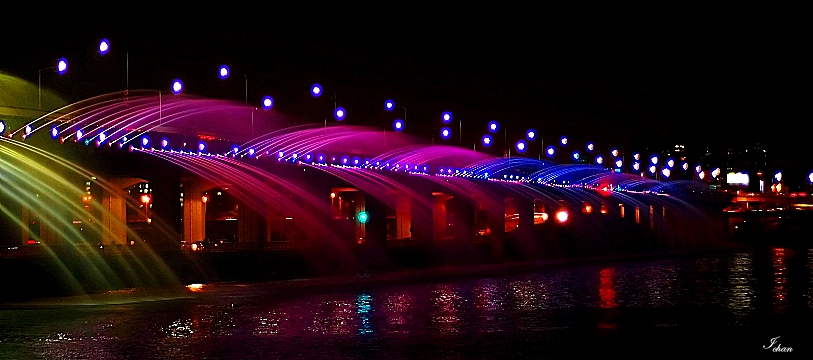
BANPODAEGYO - BANPO BRIDGE (World's Longest Fountain Bridge)


GWANGJINDAEGYO


YOUNGDONGDAEGYO


JAMSIL DAEGYO

6 Seoul Subway Shortcuts to Tourist Attractions


Did you know if you’re hanging out in Hongdae, Hongdae Station is not the only way you can get to the Hongdae area? Find out these Seoul subway shortcuts that can only come with local knowledge. These tips will help you save some time by eliminating unnecessary transfers and also allowing you to travel to other places to hang out in Seoul easier.
(Click on maps for larger images)
Essential Tour Morning 620×140

Myeongdong

How to get to Myeongdong: Myeongdong Station(명동역), line 4, exit 6 or Euljiro 1-ga Station (을지로입구역), line 2, exit 5
Myeongdong is a famous shopping district of Seoul and mega tourist hot spot. Sure, taking Seoul line number 4 to Myeongdong Station and getting out at exit 6 will get you to the heart of Myeongdong, but you can also take line number 2 and get off at Euljiro 1-ga Station. This can be better if you’re going to or coming from other popular places to hang out in Seoul  (Hongdae, Gangnam, Shinchon, Coex, etc.). Leave exit 5 of Euljiro 1-ga Station and keep walking until you see the entrance to Myeongdong on your left.

Hongdae Station

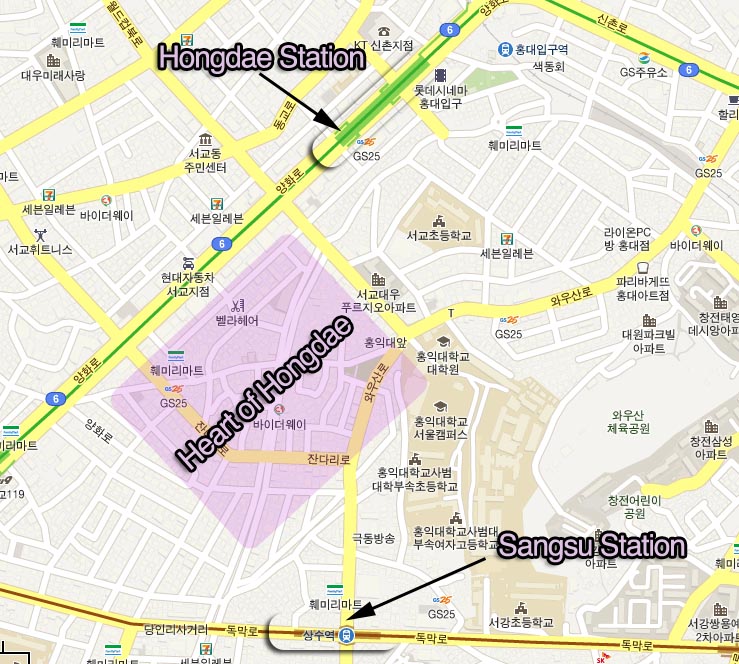
How to get to Hongdae: Hongdae University Station (홍대입구역), line 2, exit 9 or Sangsu Station (상수역), line 6, exit 1 or 2
Hongdae is a poppin college town with tons of restaurants, bars, clubs, cafes, shopping streets, and anything else you can think of. Some people are totally logical and can figure out on their own that going to Hongdae Station (line 2, exit 9) will get you to the main Hongdae area. But only do savvy Korea travelers know that Sangsu Station (line 6, exit 1 or 2) will get you to the heart of Hongdae just as fast. Sangsu Station is a good option if you’re headed to or coming from another Seoul hang out spot, Itaewon.

Gangnam Station

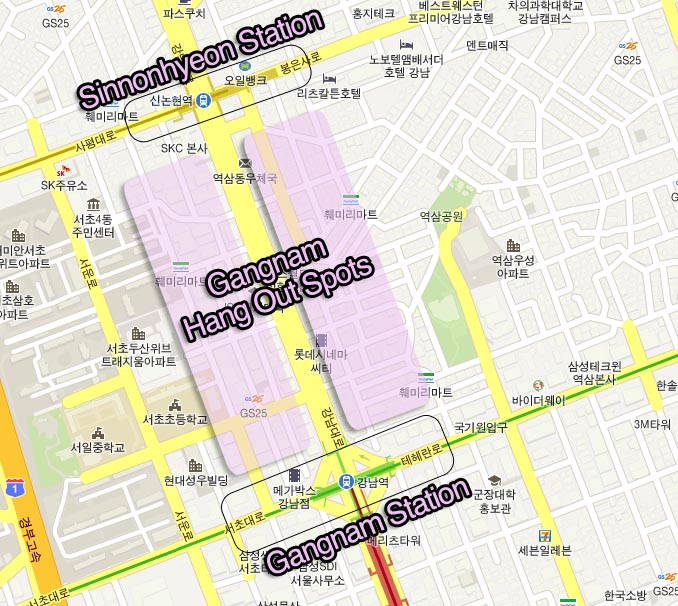
How to get to Gangnam Station: Gangnam Station (강남역), line 2, exit 10 & exit 11 orSinnonhyeon Station (신논현역), line 9, exit 5 & exit 6
Gangnam Station is huge and there are tons of places to hang out, but the majority of the hanging out is done out of Gangnam Station, line 2, exits 10 and 11. That’s where all the restaurants and bars are. But if you’re coming from Incheon or somewhere from north west Seoul, line number 9 (exits 5 & 6) might be the better option to getting to Gangnam. You might save a transfer, and  you also might get there quicker as there’s also an express train. It’ll get you to the same general restaurant and bar area.

Gyeongbokgung

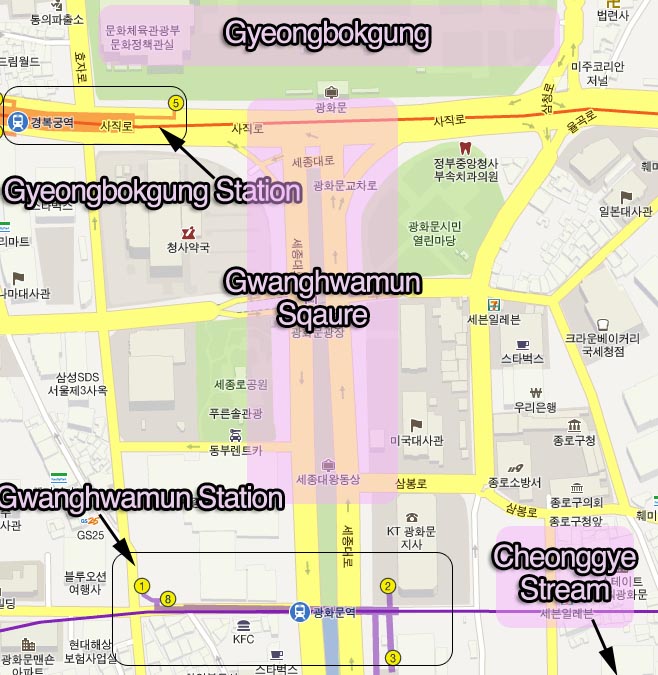
How to get to Gyeongbokgung: Gyeongbokgung Station (경복궁역), line 3, exit 5 or  Gwanghwamun Station (광화문), line 5, exit 2
Gyeongbokgung is a historical Seoul tourist attraction that tons of people find by taking line number 3 to Gyeongbokgung Station. It’ll get you straight to the gate; it is extremely straightforward. But if you want to kill two Seoul tourist attraction birds with one stone, you can also get off at Gwangwamun Station (line 5, exit 2). Although the station is a few minutes farther than Gyeongbokgung, there’s a few other Seoul tourist attractions, such as Cheonggyecheon and Gwanghwamun Square, you can see before or after your trip to Gyeongbokgung.


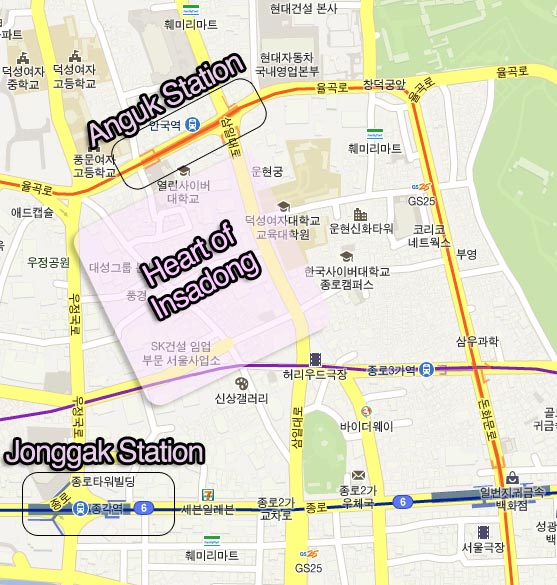
Insadong

How to get to Insadong: Anguk Station (안국역), line 3, exit 6 or  Jonggak Station (종각역), line 5, exit 3
Insadong is a Seoul sightseeing attraction because of the traditional Korean cultural experience that can be found (i.e. Korean crafts, antiques, art, tea houses, etc.). Most places on the internet will tell you that Insadong can be accessed via Anguk Station (line 3, exit 6). But what local Koreans know is that you can save a transfer if you’re already on line 5. You can get off at Jonggak Station for a short little walk over to Insadong. If you are taking this alternative route to Insadong, you can also check out Jonggak, a centuries year old bell that is set in the middle of Seoul’s modern office buildings.

how-to-get-to-coexCOEX

How to get to COEX: Samseong Station (삼성역), line 2, exit 5 or Bongeungsa Station (봉은사역), line 9, exit 7
The largest underground mall in the world, COEX Mall, was just recently renovated. It now includes some of the most popular restaurants in Seoul along with popular domestic fashion brands. Along with the renovation also came a new subway station. Originally, the only subway access was through Samseong Station, (Line 2, Exit 5). But if you get off of Exit 7 of Bongeunsa Station (line 9), you’ll now also be able to reach COEX as well. This is a great option if you’re coming from northwestern Seoul as the express train will get you there quickly. Also, you can stop by one of Seoul’s most beautiful temples Bongeungsa Temple (Exit 1) before heading to COEX.
Have your own favorite Seoul subway shortcuts? Share with us in the comment section!